
Liposomal NMN is a dietary supplement designed to provide nicotinamide mononucleotide (NMN), a precursor involved in the body’s production of nicotinamide adenine dinucleotide (NAD+). NAD+ participates in cellular energy metabolism, redox reactions, DNA repair, and several signaling processes that help cells respond to stress. Because skin cells depend on energy production and normal cellular repair, researchers have become interested in whether supporting NAD+ metabolism may also support healthy skin.
Intro: Liposomal NMN for Acne
NMN is not the same compound as niacinamide, although both are related to vitamin B3 metabolism. This distinction is important when discussing acne. Several clinical studies have investigated topical or oral nicotinamide for acne, and reviews have reported potentially useful effects, particularly for inflammatory acne. However, those findings cannot automatically be transferred to NMN supplements.
Why Consider NMN for Acne-Prone Skin?
The possible connection between NMN and acne comes mainly from the role of NAD+ in cellular metabolism rather than from direct clinical trials showing that NMN clears acne. Skin cells continuously divide, differentiate, produce lipids, respond to inflammation, and repair damage. These processes require cellular energy and appropriate metabolic signaling.
Acne itself involves several interacting factors, including excess sebum production, follicular hyperkeratinization, Cutibacterium acnes, and inflammatory responses. A supplement that supports general cellular metabolism may therefore be of interest as part of a broader approach to skin health, but it should not be presented as a replacement for established acne treatments.
Human research has shown that oral NMN can increase blood NAD+ levels. In one randomized, placebo-controlled study, healthy adults taking 250 mg of NMN daily for 12 weeks experienced increased whole-blood NAD+ without obvious adverse effects during the study period. A broader 2023 review also concluded that human NMN trials had begun to provide useful information about safety and biological effects, while noting the need for additional research.
Why Liposomal Delivery May Be Interesting
Liposomal formulations use lipid-based structures to surround an active ingredient and are marketed as a way to support its delivery and absorption. The practical appeal of a liposomal NMN product is therefore not that the liposomal form has been proven to cure acne, but that it offers a delivery format for people who want to use NMN as an NAD+ precursor.
When evaluating such a product, several factors deserve attention:
- The actual amount of NMN per serving.
- Ingredient purity and manufacturing standards.
- Independent testing or quality documentation.
- Directions for use and serving size.
- Additional ingredients included in the formulation.
- Storage requirements and product stability
Liposomal NMN is a supportive supplement for cellular and skin health, with potential evidence of acne treatment and provention.
How NMN May Support Acne Treatment
NAD+ and Skin Cell Function
NMN may support skin health indirectly by increasing the availability of NAD+, a molecule required for many cellular reactions. NAD+ acts as a cofactor in energy metabolism and participates in processes associated with DNA repair, cellular stress responses, and gene regulation. These functions are relevant to healthy skin because epidermal cells need continuous energy and repair capacity.
Human NMN research provides evidence that oral supplementation can affect NAD+ status. In a randomized clinical trial, 250 mg of NMN taken daily for 12 weeks increased whole-blood NAD+ levels in healthy participants. The study did not investigate acne, so its results should be interpreted as evidence of a biological effect rather than evidence of acne treatment.
Supporting Normal Inflammatory Responses
Inflammation is one of the major components of acne, so cellular pathways that influence inflammatory responses are relevant when researchers consider NAD+ metabolism and skin health. Acne lesions can develop when follicular blockage and other processes trigger an inflammatory response. Reducing excessive inflammation is also one reason why several established acne therapies can improve the appearance of inflammatory lesions.
Nicotinamide provides an important example of how a vitamin B3-related compound can affect acne. A review of clinical studies found that several topical nicotinamide studies reported reductions in acne, although the authors emphasized that the overall evidence remained limited and that additional research was needed.
Supporting Skin Repair
Skin repair depends on coordinated cellular activity, and NAD+ participates in biological pathways associated with cellular maintenance and DNA repair. This raises interest in NAD+-supporting compounds for skin aging, recovery, and general skin function.
Research on other NAD-related compounds provides some evidence that increasing NAD+ availability can affect skin biology. For example, a human study of a topical lipophilic niacin derivative found increased skin NAD and improvements in measures related to epidermal differentiation and barrier function. This study did not use NMN, so it should be considered supporting biological evidence rather than direct proof of an NMN effect.
NMN as Part of an Acne Strategy
NMN should be viewed as a possible supportive component rather than a standalone acne treatment. People with acne may still require treatments that target sebum production, follicular plugging, inflammation, or microbial factors. Depending on the severity and type of acne, dermatologists may recommend topical retinoids, benzoyl peroxide, azelaic acid, antibiotics, hormonal treatments, or isotretinoin.
A sensible approach can include:
- A consistent gentle cleansing routine.
- Non-comedogenic skin-care products.
- Sun protection.
- Adequate sleep and balanced nutrition.
- Evidence-based acne medication when needed.
- NMN supplementation when appropriate for general nutritional goals.
Benefits of Liposomal NMN for Acne and Skin
Supporting Healthy Cellular Function
One potential benefit of Liposomal NMN is support for normal cellular NAD+ metabolism, which is important for the energy demands of skin cells. Skin constantly renews itself, and this process requires coordinated cellular metabolism. NMN serves as a precursor that can contribute to NAD+ production.
This potential benefit is broader than acne treatment. Healthy cellular metabolism can support normal skin maintenance, although supplementation does not guarantee visible changes in skin appearance.
Supporting Skin Barrier Function
A healthy skin barrier helps maintain hydration and protects the skin from external irritants. The skin barrier depends on properly differentiated epidermal cells and an organized lipid structure. Barrier disruption can contribute to dryness, irritation, and sensitivity, which may complicate acne care.
Research involving NAD-related compounds provides some evidence for a relationship between NAD metabolism and skin barrier function. A randomized study of topical myristyl nicotinate, a compound designed to increase skin NAD, reported improvements in epidermal thickness, epidermal renewal, and transepidermal water loss.
Supporting Healthy Skin Appearance
NMN may have potential value for general skin health because NAD+ is involved in cellular processes associated with energy production, repair, and stress responses. These functions are relevant to maintaining normal skin appearance over time.
For acne-prone individuals, this means that the potential value of NMN may extend beyond individual pimples. The goal is better overall cellular support rather than a direct topical effect on an acne lesion.
Possible Support for Inflammation Control
Inflammatory balance is important for people with acne because inflammatory activity contributes to red and swollen lesions. Nicotinamide has been studied more directly for this purpose than NMN. Clinical trials have reported improvements with topical nicotinamide in people with inflammatory acne, and a review identified several studies showing reductions in acne compared with baseline or similar results to other treatments.
NMN may influence cellular pathways connected with NAD+ metabolism, but researchers have not yet established that oral NMN produces a clinically meaningful reduction in acne inflammation.
Potential Advantages of a Liposomal Format
The main proposed advantage of a liposomal NMN product is its delivery format rather than a proven acne-specific effect. Liposomal products place an ingredient within or alongside lipid structures intended to influence its delivery. Product quality can vary, so the presence of the word “liposomal” alone does not establish superior absorption or clinical effectiveness.
When selecting a product, consumers should consider:
- NMN dose per serving.
- Ingredient transparency.
- Manufacturing quality.
- Testing for purity and contaminants.
- Clear expiration and storage information.
- Instructions from the manufacturer.
- Whether the product makes claims that go beyond the available evidence.
Liposomal NMN Review: Ingredients, Quality, and Use
NMN as the Main Ingredient
The first factor to examine in a Liposomal NMN supplement is the amount and form of NMN provided in each serving. Consumers should be able to identify the NMN quantity clearly on the label and should understand how many capsules, softgels, or milliliters constitute one serving.
The clinical evidence for oral NMN is still developing. One randomized human trial used 250 mg daily for 12 weeks and found increased whole-blood NAD+ without obvious adverse effects during the study. This does not establish 250 mg as an appropriate dose for treating acne, because the study did not evaluate acne.
Product Quality
Product quality matters because the amount stated on a supplement label does not by itself prove the identity, purity, or stability of the ingredient. Consumers should look for manufacturers that provide clear ingredient information and appropriate quality-control documentation.
Third-party testing can provide additional information about identity and contamination, although the exact testing program and laboratory standards should be examined rather than treated as interchangeable.
NMN products can also differ in packaging and storage requirements. Following the manufacturer’s storage instructions can help preserve product quality.
How to Use Liposomal NMN
NMN should be used according to the product label unless a healthcare professional provides different instructions. Users should not increase the serving size simply because they are trying to obtain faster acne results.
People who take prescription medicines, have chronic health conditions, are pregnant or breastfeeding, or plan to use NMN for a child or teenager should discuss supplementation with a qualified healthcare professional.
Acne itself also deserves appropriate assessment. Persistent, painful, nodular, or scarring acne may require medical treatment rather than nutritional supplementation alone.
What a Product Review Can and Cannot Establish
A supplement review can evaluate ingredients, formulation, labeling, quality information, and practical use, but it cannot establish that the product treats acne unless appropriate clinical trials support that claim. This distinction is especially important for NMN because much of the scientific interest has focused on NAD+ biology, aging, metabolism, and general safety rather than acne.
A responsible product review should therefore separate three categories of evidence:
- Evidence about NMN and NAD+ levels.
- Evidence about NMN and general human health.
- Evidence specifically involving acne.
The first category has human evidence, including controlled trials showing increased NAD+ after oral NMN. The third category currently has a major evidence gap.
Liposomal NMN vs. Other NMN Supplements
Liposomal and Conventional NMN
The main difference between liposomal and conventional NMN supplements is the formulation used to deliver the NMN rather than the identity of the active ingredient. Conventional NMN products may provide NMN in capsules, tablets, powders, or other standard formulations, while liposomal products incorporate NMN into a lipid-based delivery system.
The word “liposomal” can sound like a guarantee of superior absorption, but product-specific evidence is needed to establish that advantage. A consumer should therefore compare actual formulation data rather than assuming that one delivery system is automatically better.
Comparing NMN With Other NAD+ Precursors
NMN is one of several compounds studied as a way to influence NAD+ metabolism, with nicotinamide riboside (NR) being another widely researched NAD+ precursor. Both NMN and NR have been studied in humans, but their clinical research programs and available products differ.
The choice between these compounds should not be based on the assumption that one has been proven superior for acne. Current human NMN research demonstrates that supplementation can increase NAD+ levels, but this does not establish that NMN is more effective than other NAD+ precursors for skin conditions.
NMN Compared With Nicotinamide
Nicotinamide deserves separate consideration because it has direct clinical research in acne that NMN currently lacks. Several trials have examined topical nicotinamide for inflammatory acne, including randomized comparisons with clindamycin. One study found similar improvements between 4% nicotinamide and 1% clindamycin after eight weeks. Another randomized trial also found that 5% nicotinamide was effective for mild-to-moderate acne.
These results make nicotinamide relevant to an acne discussion, but they should not be used to claim that NMN has the same effect. The compounds have different chemical structures and roles in NAD+ metabolism.
Liposomal NMN Compared With Standard Acne Products
NMN supplements serve a different purpose from topical acne medications such as retinoids, benzoyl peroxide, azelaic acid, and prescription treatments. Acne medications are designed to target specific mechanisms involved in acne, while NMN is primarily used as a nutritional supplement intended to influence NAD+ metabolism.
For someone with active acne, this distinction is important. A person may choose to use an NMN supplement for general wellness while continuing an evidence-based acne regimen recommended by a healthcare professional.
A practical comparison should therefore focus on the intended use:
- Liposomal NMN: NAD+ precursor and nutritional supplement.
- Standard NMN: NAD+ precursor in a non-liposomal formulation.
- NR: another NAD+ precursor.
- Nicotinamide: vitamin B3 compound with direct acne research.
- Acne medications: treatments specifically developed to control acne mechanisms.
What Should Guide the Choice?
The most useful comparison is based on evidence, formulation, quality, safety information, and personal goals rather than marketing claims. Someone primarily interested in acne treatment should recognize that established acne therapies have substantially more direct evidence for acne than NMN.
Is Liposomal NMN a Good Choice for Acne Treatment?
What We Know
Liposomal NMN may be a reasonable supplement for people interested in supporting NAD+ metabolism, but current research does not establish it as a standalone treatment for acne. Human studies show that oral NMN can increase NAD+ levels, providing evidence that the compound has a measurable biological effect.
The scientific rationale for studying NMN in skin health comes from the importance of NAD+ in energy metabolism, cellular maintenance, DNA repair, and stress responses. These processes matter to healthy skin, but biological plausibility is not the same as clinical evidence.
How It May Fit Into a Skin-Care Plan
People who choose to use Liposomal NMN should consider it an addition to, rather than a replacement for, appropriate acne care. A basic acne strategy may include gentle cleansing, non-comedogenic moisturization, sun protection, and evidence-based active ingredients selected according to acne type and severity.
For mild acne, over-the-counter treatments may be sufficient. Persistent or severe acne may require professional evaluation. Acne that produces deep nodules, pain, scarring, or significant pigmentation changes deserves particular attention because early treatment can help reduce long-term skin damage.
Overall Assessment
Liposomal NMN is an interesting option for people who want to support NAD+ metabolism and general cellular health while maintaining a broader skin-care routine. Its potential relevance to acne comes from cellular and metabolic mechanisms rather than strong clinical evidence showing that it clears acne.
The strongest evidence currently supports several separate points: oral NMN can increase NAD+ levels in humans; NAD+ is important for many cellular processes; and nicotinamide has been studied directly in acne. What remains uncertain is whether taking NMN produces a clinically meaningful improvement in acne itself.
For that reason, consumers should choose a Liposomal NMN product based on transparent labeling, appropriate quality controls, realistic claims, and responsible use. They should also maintain evidence-based acne treatment when necessary.
Liposomal NMN may have a place in a broader approach to skin and cellular health, but it should currently be viewed as a supportive supplement rather than a clinically proven treatment or prevention strategy for acne.
Liposomal NMN
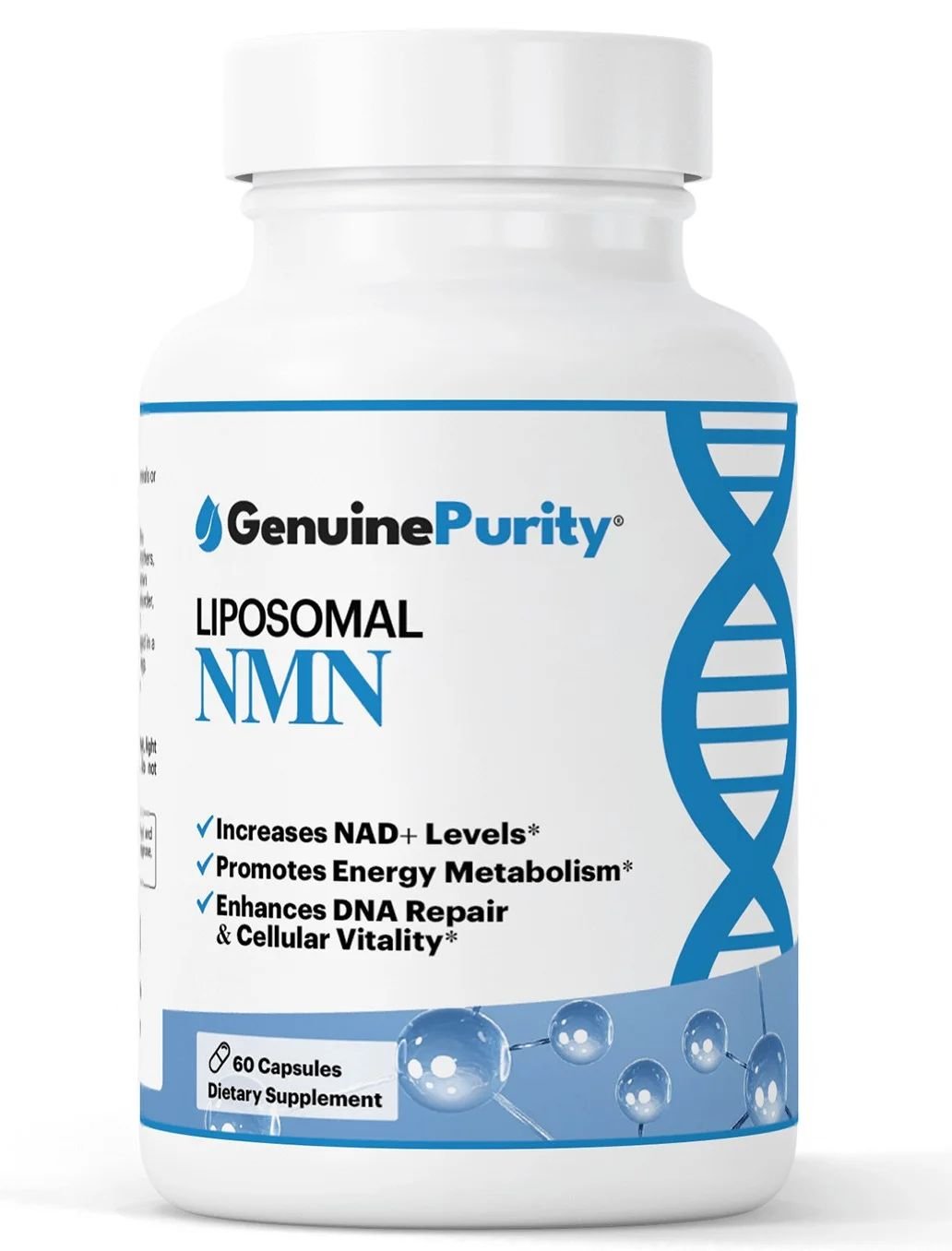
Liposomal NMN may support healthy skin by promoting NAD+ metabolism, cellular energy production, and normal cellular repair. These processes are important for maintaining healthy skin and may provide supportive benefits for acne-prone skin as part of a broader skin-care routine.
If you are looking for an NMN supplement to support cellular health and healthy skin, Liposomal NMN can be a convenient option to add to your daily wellness routine.